The short version
- The biggest risks on older Rangers (PX to PX3, 2011–2022) are the 3.2L's EGR cooler and oil pump. Both can destroy the engine.
- On the 2.0L bi-turbo (PX3 and Next-Gen), check the wet timing belt is on schedule and the 10-speed recall work has been done.
- Next-Gen Rangers (2022 on) are newer, but have their own recalls, plus early tailshaft vibration and V6 oil leak reports.
- On the 14 Rangers we inspected, 5 had worn steering or front suspension parts and 4 had a diff or engine oil leak. 11 had a weak battery, stored fault codes or resprayed panels.
- Once every fault was priced, the typical Ranger in our reports needed around $5,000 of work. Most of it does not show on a test drive.
The Ranger is one of Australia's best-selling vehicles, so there is no shortage of used ones in Sydney. Most have worked hard: towing, carrying loads, going off-road or doing fleet duty. Below are the faults to check, most serious and expensive first. Each one is marked by model (older PX-series or Next-Gen) and by where the evidence comes from: our own inspections, or what owners and workshops widely report.
Older or Next-Gen: which Ranger am I looking at?
The engine and gearbox matter more than the year. Most problems in this guide apply to one generation or engine, so check the badge, build plate or listing first.
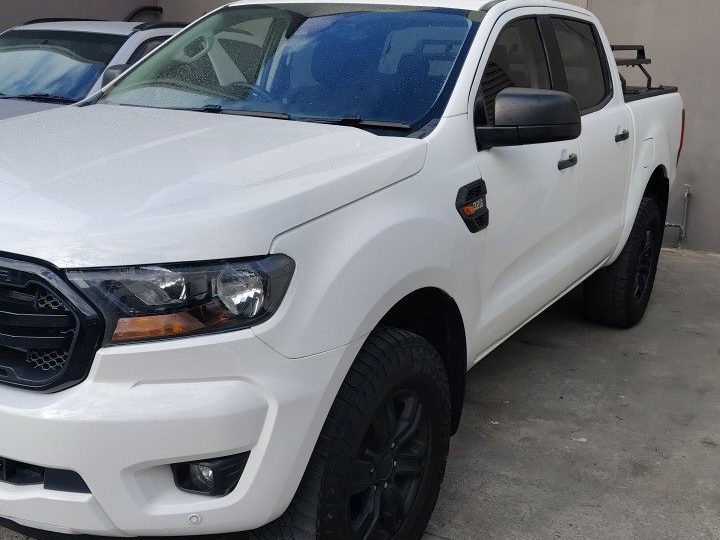 Older PX3 (2018–2022)
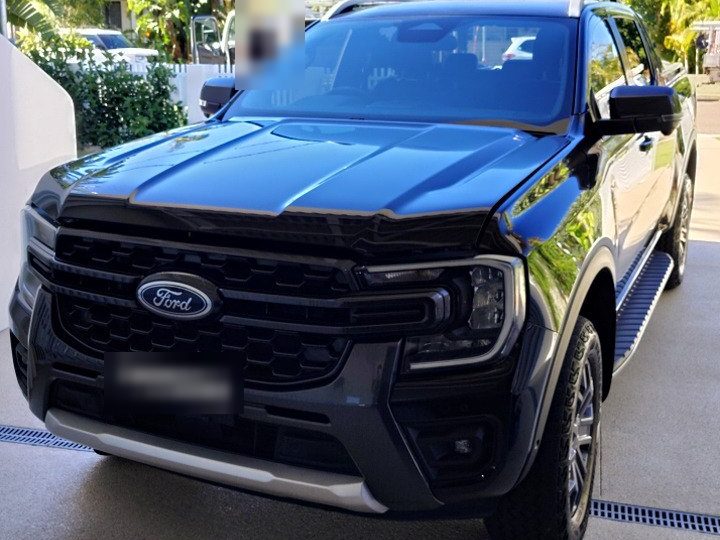 Next-Gen (2022 on)
| Series | Years (approx.) | Diesel engines | Main concerns |
|---|---|---|---|
| Older PX | 2011–2015 | 2.2L 4-cyl, 3.2L 5-cyl | EGR cooler, oil pump, injectors, intercooler hoses, early limp mode |
| Older PX2 | 2015–2018 | 2.2L 4-cyl, 3.2L 5-cyl | As PX, plus DPF on 3.2L from late 2016 |
| Older PX3 | 2018–2022 | 2.2L, 3.2L, 2.0L bi-turbo (10-speed) | 3.2L issues continue; 2.0L wet belt; 10-speed pump gear recall |
| New Next-Gen | 2022 on | 2.0L single/bi-turbo, 3.0L V6 | Recalls (10-speed Park shift, V6 camshaft sprocket), early tailshaft vibration, V6 oil drain leaks, DPF |
What we found on 14 Rangers
These figures come from 14 Ford Rangers we inspected in Sydney between May and November 2026: model years 2016 to 2023 and 35,000 to 242,000 km. Two were Next-Gen (2023). The rest were older PX2 and PX3 models, almost all diesel automatics. The sample is small. It tells you what to look for, not the odds for a particular car.
Estimates are the ranges in our customer reports. "Median" uses the midpoint of each car's range. Actual repair costs vary.
Ford Ranger common problems, most serious first
EGR cooler failure
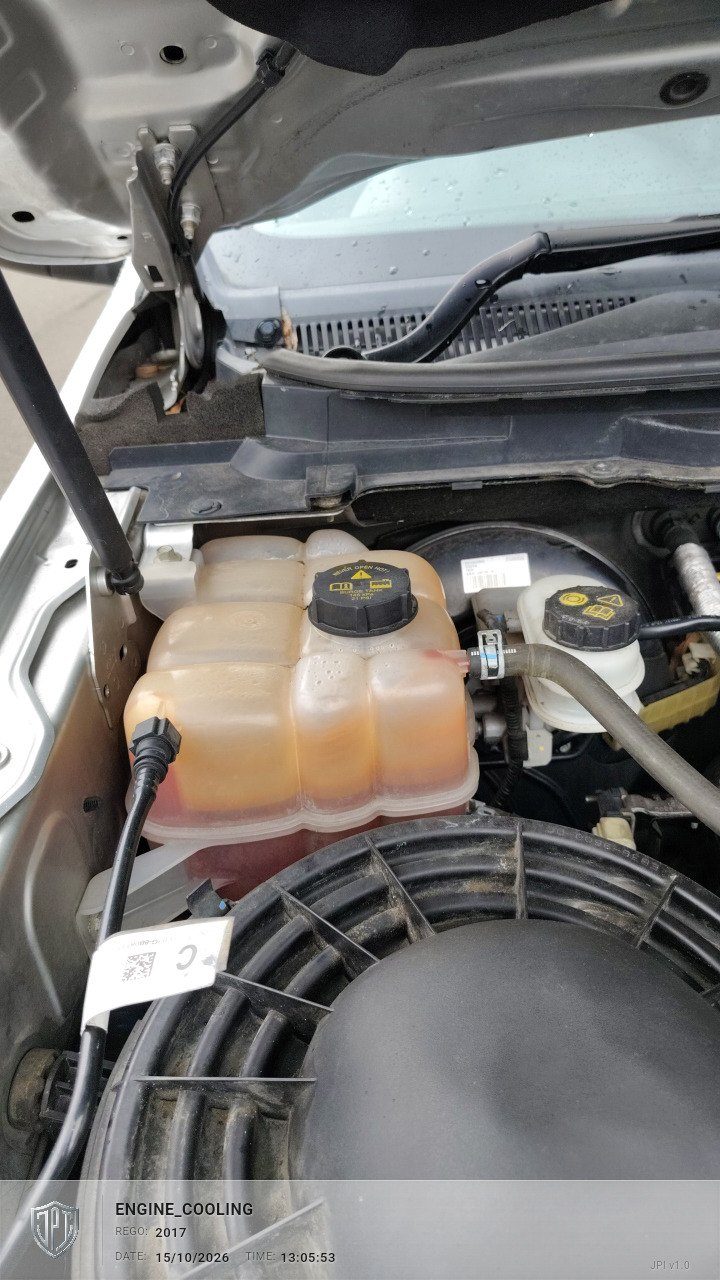
The EGR cooler uses engine coolant to cool exhaust gas. When it cracks, coolant leaks into the intake and is burned. In the worst case enough coolant collects in a cylinder to hydraulically lock the engine and bend a connecting rod, or the head gasket fails. Owners have reported that Ford wrote to some 3.2L owners about extended coverage for EGR cooler failures, so ask a Ford dealer whether the car is eligible.
- Coolant level dropping with no visible leak
- White smoke from the exhaust, especially on a cold start
- Overheating or a coolant warning
Ask whether the cooler has been replaced and whether the coolant needs regular top-ups. A cooling system pressure test, a look for coolant residue around the EGR area and a cold-start smoke check all help. Many owners fit a low-coolant alarm.
Oil pump and the "quick oil change" rule
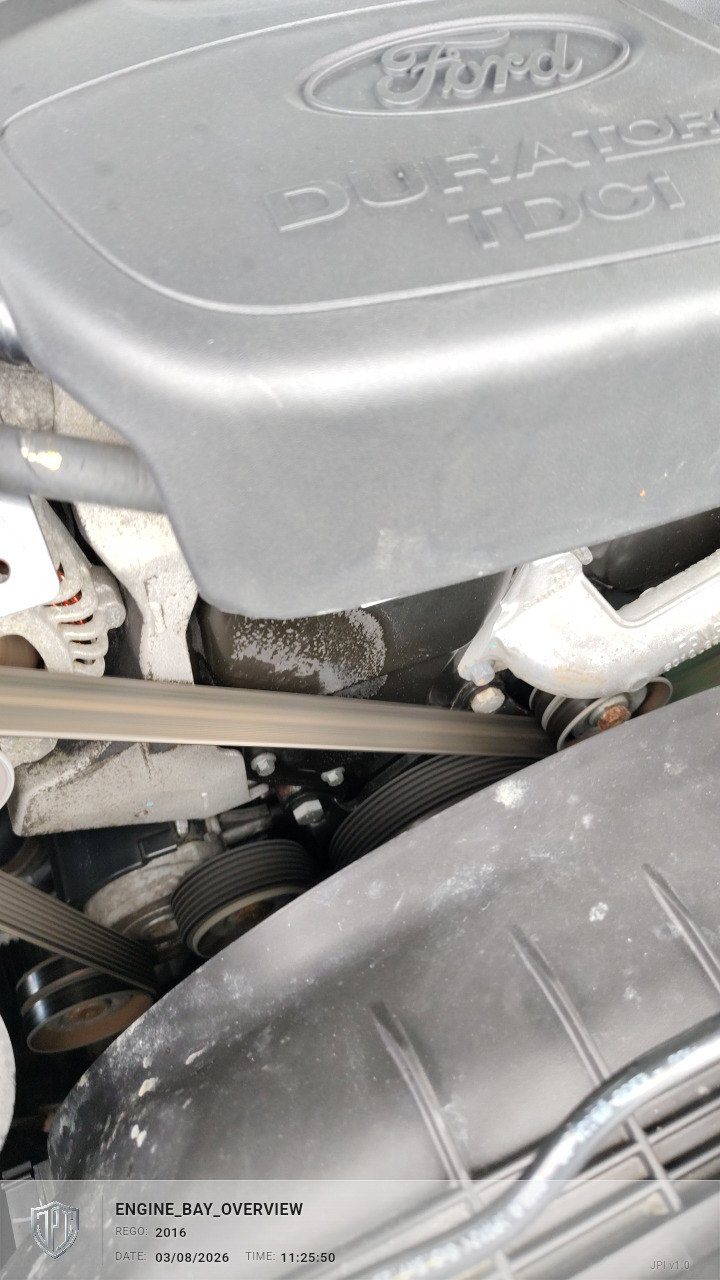
On these engines, if the sump is left drained too long during an oil change, the oil pump can lose its prime and the engine then runs briefly with no oil pressure. A workshop that knows Rangers drains, plugs, refills and restarts within about 10 minutes. Sludge from long service intervals adds to the risk by blocking the oil pickup.
- Oil pressure light flickering or staying on
- Knocking from the bottom of the engine
- Missing services or long oil change intervals
Look for a complete service history, ideally from a Ford dealer or a diesel workshop that knows these engines. Listen to a cold start and check the oil pressure light goes out straight away.
Wet timing belt (2.0L bi-turbo)
The 2.0L bi-turbo runs its timing belt and oil pump belt inside the engine, bathed in oil. As the belt ages, rubber debris can clog the oil pickup and starve the engine of oil. Ford shortened the replacement interval from 260,000 km / 10 years to 160,000 km / 6 years, and many specialists suggest earlier on hard-worked utes.
- Few or no symptoms before failure
- Oil pressure warning on a high-km engine
- No record of a belt change on an older or high-km car
Check the service book for the belt change against the car's age and kilometres. If it is due or unknown, budget for it. Short oil change intervals with the correct oil are the best protection.
10-speed automatic: recall and shift quality
Rangers and Everests with the 2.0L bi-turbo and 10-speed automatic built from late 2017 to 2019 were recalled because the transmission fluid pump gear can fail, causing a sudden loss of drive. Ford re-notified the recall in 2026 (REC-006659) for vehicles still not repaired. Next-Gen Rangers from 2022 had a recall for shifting into Park when the battery charge is low (REC-006541). Many owners also report shudder, flaring between 3rd and 4th and harsh shifts, which Ford has addressed with software updates.
- Shudder at 60–110 km/h or jerky pull-aways
- Harsh or delayed shifts, gear hunting on hills
- No record of the recall work or software updates
Ask for proof the recall work was done, or check the VIN with Ford (133 673) or at vehiclerecalls.gov.au. On the drive, cover a range of speeds, including light throttle at 60–80 km/h where shudder shows up. The 3.2L uses a 6-speed automatic with a cleaner record, but its fluid still needs changing.
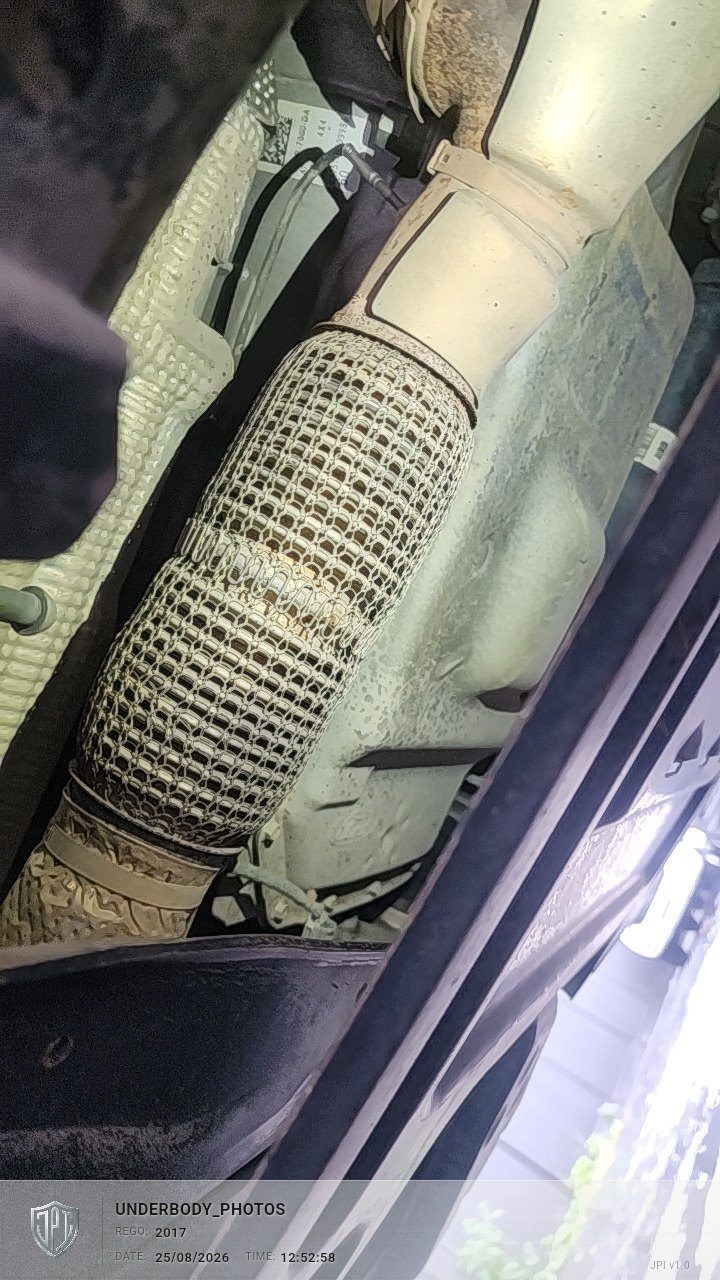
DPF and EGR blockage
The diesel particulate filter traps soot and burns it off on longer drives. Rangers used for short trips around town never get hot enough, so the filter clogs and the EGR system carbons up. It is one of the most common complaints from Ranger owners, and it is not unique to the Ranger.
- DPF or engine warning light
- Frequent regenerations (fan running, high idle after switch-off)
- Loss of power or limp mode
- Rising fuel use and smoke
Ask how the car was used: short suburban trips are the risk. Scan for DPF and EGR codes and, where the scan tool allows, check the soot load and regeneration history. Look for removed or modified emissions parts, which can make a car illegal to register.
Injector wear
Dirty or poor-quality fuel wears the common-rail injectors. A dripping injector can create a hot spot on a piston and, in the worst case, burn a hole in it. Some diesel specialists recommend reconditioning or replacing injectors at around 100,000 km on hard-worked utes.
- Rough idle or misfire, especially when cold
- Knocking or diesel rattle
- Smoke and loss of power
- Rising fuel use
A scan tool reading injector correction values tells the real story. Listen for uneven idle, watch for smoke under load and ask for injector service records on higher-km cars.
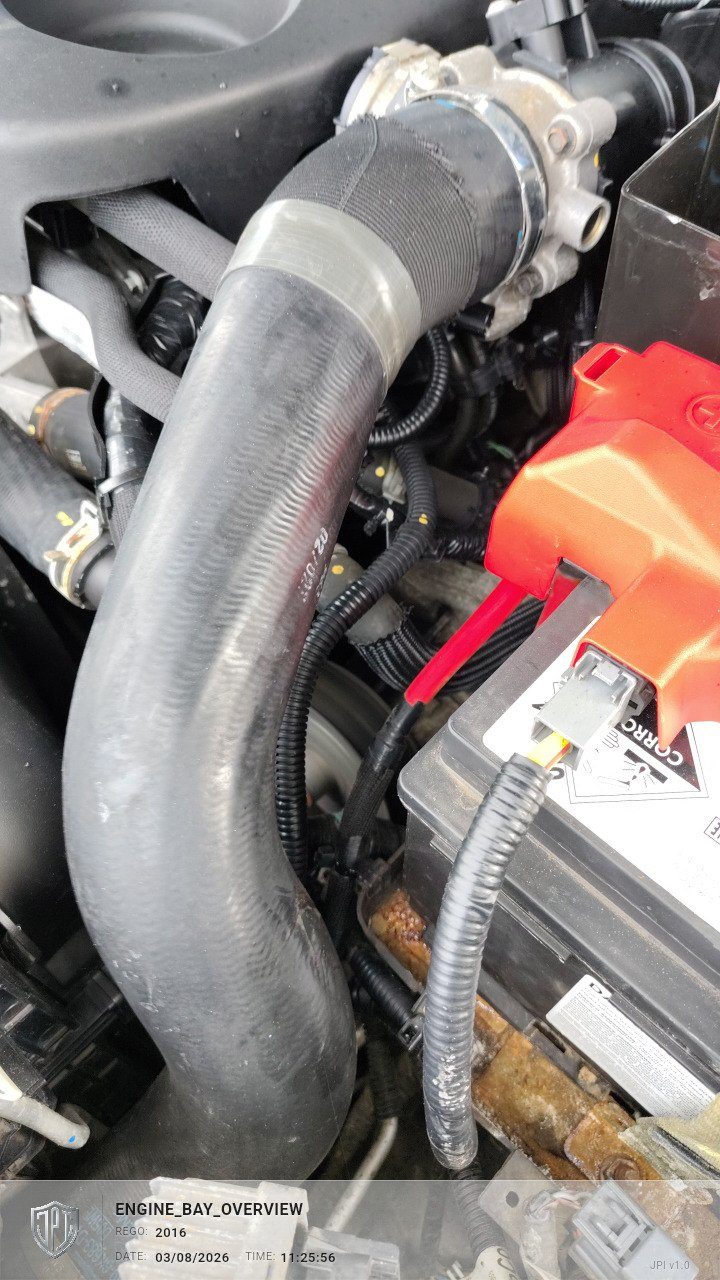
Turbo wear, split intercooler hoses and limp mode
The rubber hoses between the turbo, intercooler and intake can fatigue and split, especially on tuned or towing utes, and the engine drops into limp mode. Turbos also wear, often from a restricted oil feed line or a sticking actuator. Early PX models had sensor faults (crank angle and exhaust temperature sensors) that caused sudden limp mode too.
- Sudden loss of power or limp mode under load
- Whine, whistle or siren noise from the turbo
- Black or grey smoke
- Oil in the intercooler piping
Look at the intercooler hoses and joins for splits and oil. On the test drive, pull hard up a hill and watch for flat spots or warning lights, then scan for boost and sensor codes.
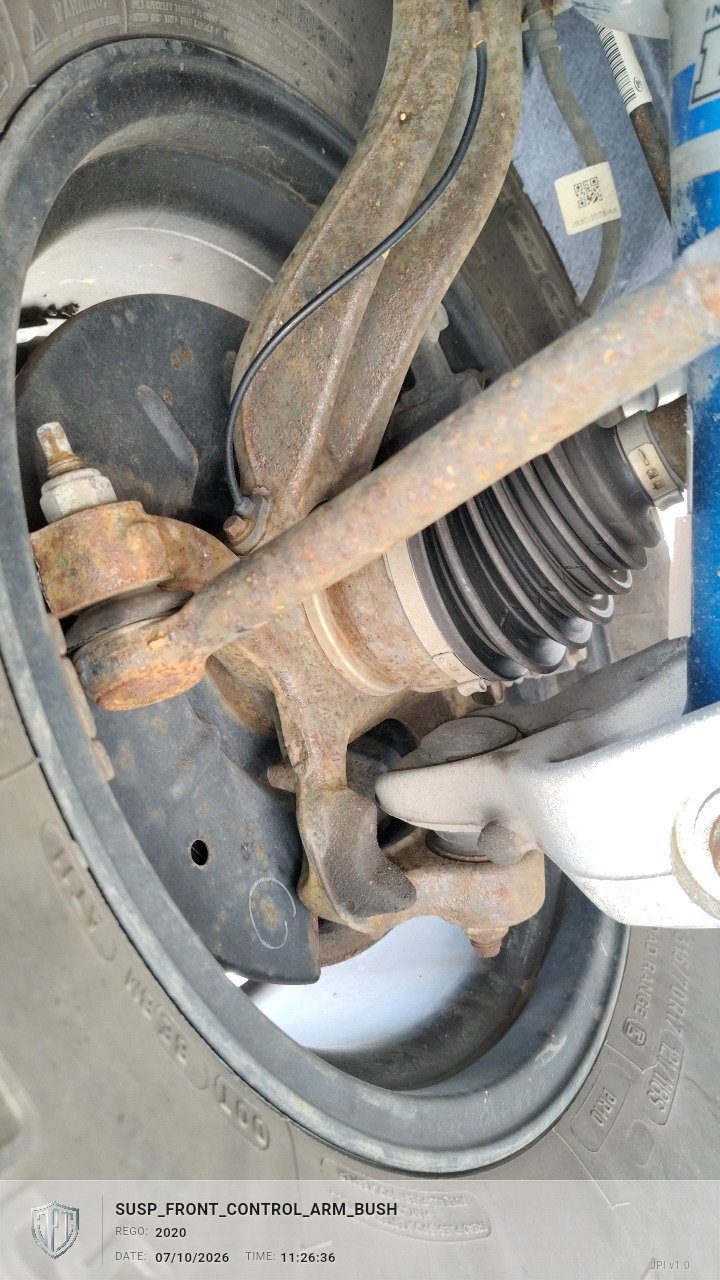
Steering and front suspension wear
A heavy ute, big tyres and rough roads load up the front end. On the Rangers we inspected we found worn tie rod ends, a worn ball joint, a worn steering rack, leaking front shock absorbers, and worn strut top mounts and sway bar bushes. Low kilometres are no guarantee: one of the worst front ends we saw was on a 56,000 km Raptor.
- Clunks over bumps or when turning at low speed
- Wandering on the highway or an off-centre steering wheel
- Heavy or notchy steering
- Oil on the shock absorber body
With the wheels off the ground, check for play in the tie rod ends, ball joints and wheel bearings, and look for split steering boots and oily shocks. On the drive, listen for clunks and feel for wandering. Uneven tyre wear is often the first clue.
V6 turbo oil drain leaks and glow plug faults
Owners of the Next-Gen V6 have reported oil leaking from the turbo oil drain line, sometimes within a few thousand kilometres, and glow plug faults that light the check engine light. Both have generally been fixed under warranty. Separately, V6 Rangers and Everests built 2022–2025 were recalled because the left-hand camshaft sprocket can fracture and stall the engine.
- Oil drips or an oil warning light
- Check engine light with glow plug codes
- Occasional limp mode
Look for oil around the turbos and under the engine, scan for glow plug codes, and confirm the camshaft sprocket recall and any warranty repairs with a Ford dealer.
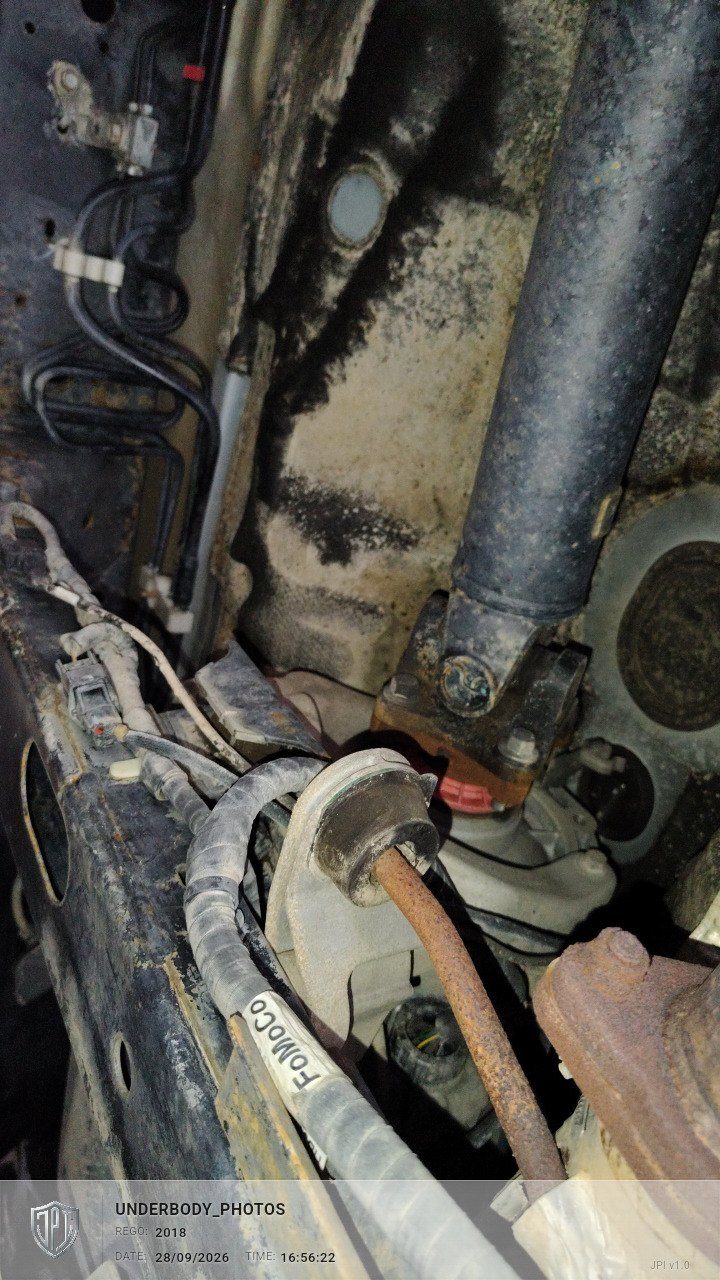
Differential and engine oil leaks
Diff leaks usually come from the pinion seal or the cover. Engine leaks are often from the sump, rocker cover or turbo oil lines. A slow weep is not urgent, but a wet, dripping diff can run low and wear the gears. Two of our Rangers were also low on engine oil, which can point to leaks or burning oil.
- Wet, grimy residue on the diff housing or under the engine
- Oil spots where the car is parked
- Whine from the rear on the drive
Look underneath at both diffs, the sump and the transfer case, and check the engine oil level. A freshly degreased underside on an old ute is worth asking about.
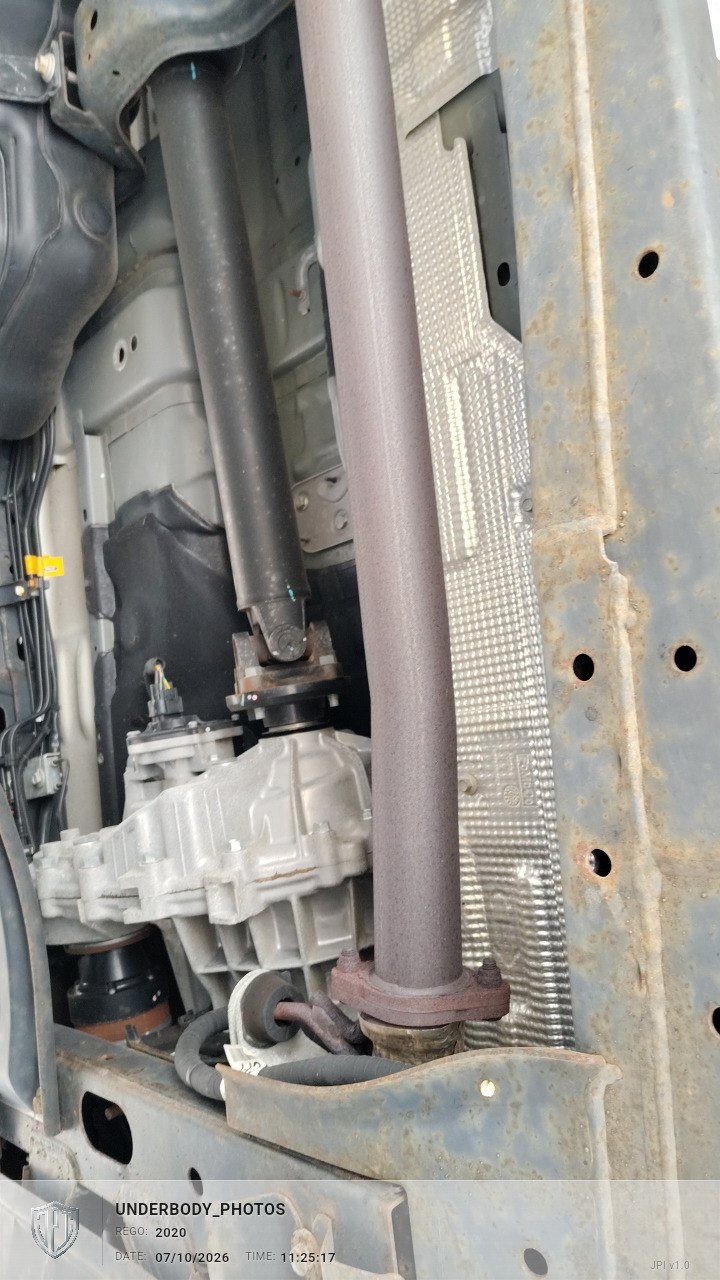
Driveline vibration: tailshaft and centre bearing
Early Next-Gen Rangers (2022) had tailshaft vibration traced to a supplier, and Ford fitted updated tailshafts. On PX-series 4x4s the tailshaft centre bearing wears, causing vibration under load. One of the Rangers we inspected needed its propeller shaft serviced for vibration.
- Vibration or shudder at highway speed
- Thump or clunk when accelerating or taking off
- Vibration that changes with load, not engine speed
Drive at 80–110 km/h and feel for vibration through the floor and seat. Underneath, check the centre bearing rubber and the uni joints for play. On a 2022 Ranger, ask whether the tailshaft was replaced.
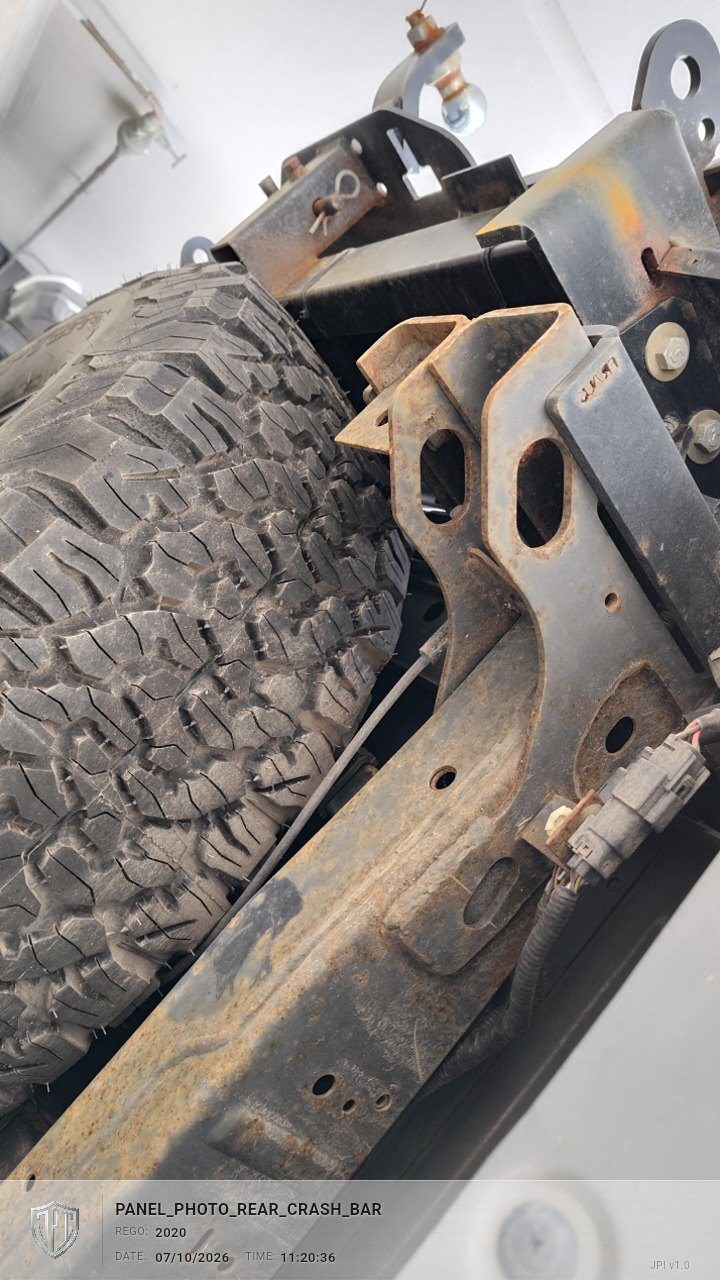
Rust, crash bars and underbody damage
Most of the rust we found was on bolt-on parts: bullbars, rear crash bars, tow bars and the tailshaft. Surface rust there is cosmetic and cheap to treat. What matters is rust that has spread to the chassis rails, spring hangers and body mounts, and scrape damage that hints at hard off-road use.
- Flaking rust on bars, brackets and the tailshaft
- Scrapes and dents on bash plates and sills
- Sand or salt residue in the chassis rails
Get underneath with a torch. Check the chassis rails, where the bars mount, the spring hangers and the rear of the tray. Ask how the car was used: beach driving and boat launching speed up rust a lot.
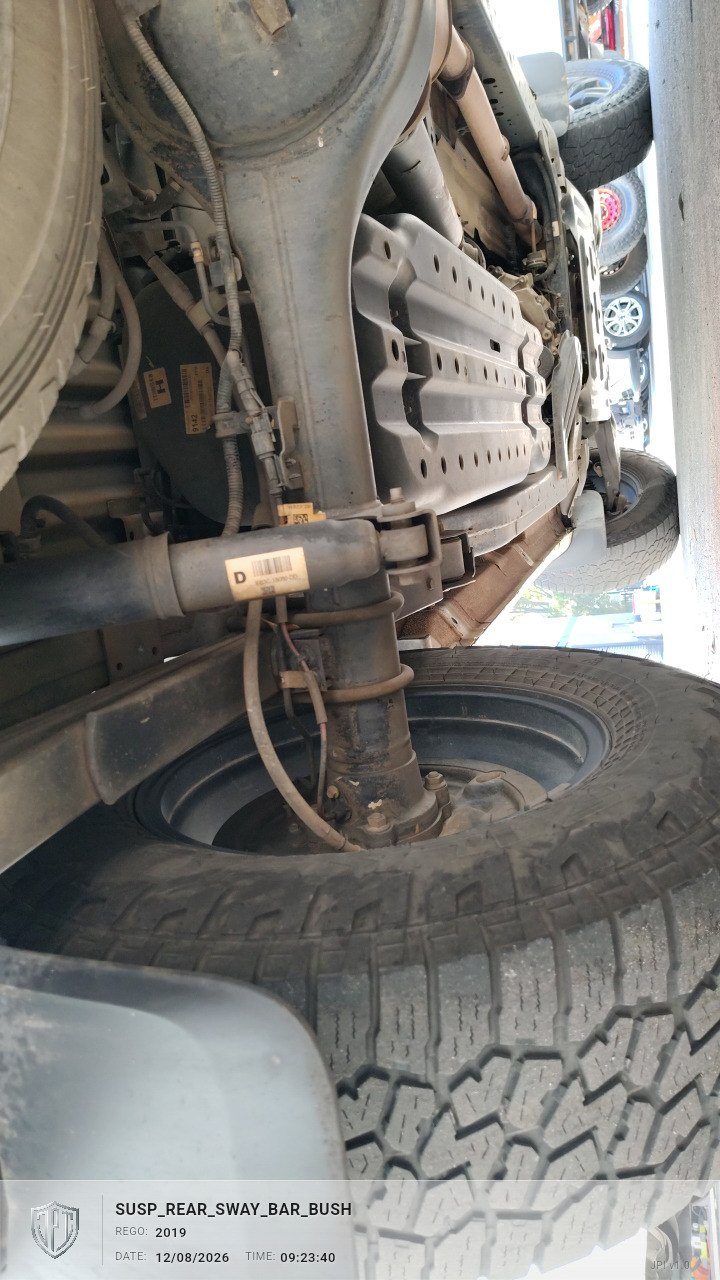
Rear leaf spring sag and cracking
Canopies, drawers, bullbars, winches and caravans add weight that stock springs were not built to carry all the time. The rear sags, the leaves can crack, and the steering goes light and vague when loaded.
- Rear sitting low, or nose-up stance
- Bottoming out over bumps
- Cracked or shifted leaves
- Light steering when loaded
Look at the stance from the side and check the leaves for cracks or shifted clamps. Aftermarket springs or airbags are common, so check they are legal for the car's GVM.
Clutch and dual-mass flywheel (manuals)
Manual Rangers use a dual-mass flywheel, which wears faster on utes that tow or crawl off-road. When it goes, it is usually replaced with the clutch.
- Shudder or vibration when taking off
- Rattle at idle that changes when the clutch is pressed
- Slipping under load or hard gear selection
Take off gently on a slope and listen at idle with the clutch in and out. Ask whether a clutch kit has ever been fitted, and how much towing the car has done.
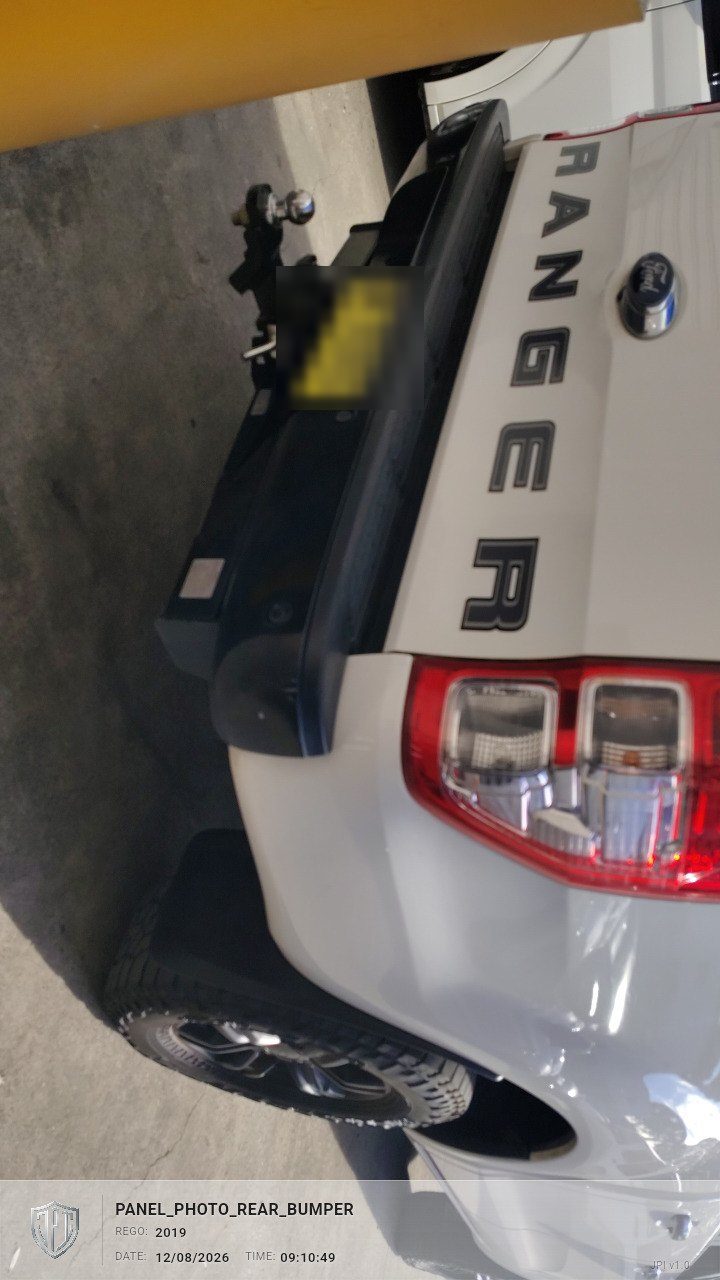
Previous paintwork and accident repairs
Bumpers get scraped in car parks and on tracks, so a repainted front bumper (9 of our 14) is common and usually harmless. It becomes a concern when several panels on one side have been repainted, or the readings point to filler, because that suggests a bigger accident than the seller mentioned.
- Colour or texture that doesn't match between panels
- Overspray on rubbers, trims or badges
- Uneven panel gaps
A paint thickness gauge shows which panels were repainted and roughly how heavily. We take a reading on every panel. Pair it with a free odometer & VIN check and a PPSR to look for written-off history.
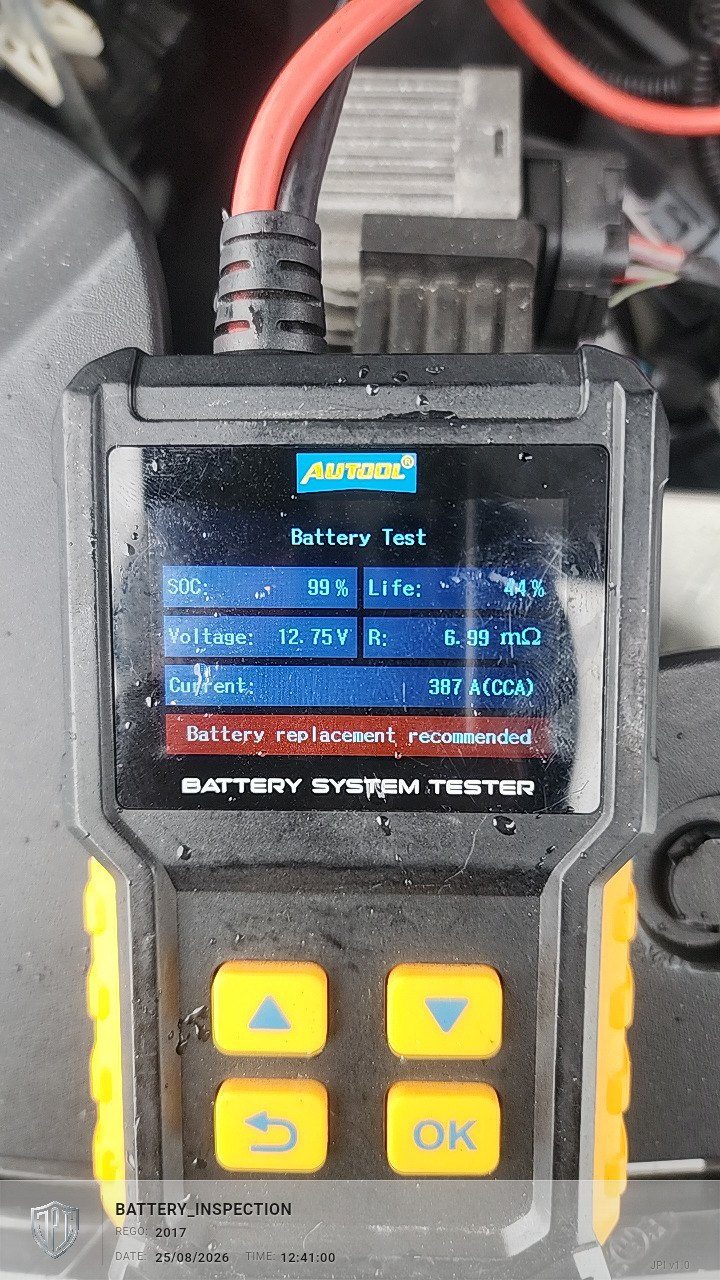
Weak 12V battery and stored fault codes
This was the most common finding on the Rangers we inspected. A battery can show a healthy voltage and start the engine on a warm day while its capacity is nearly gone, and accessories such as fridges and lights drain it faster. Low voltage also leaves fault codes across the Ranger's many control modules, and most of them never light anything on the dash. Some codes trace back to the battery. Others point to real faults such as headlight circuits, tyre pressure sensors and climate control flaps.
- Slow cranking on cold mornings
- Stored codes in several modules with no warning light
- Codes recently cleared before a sale
Use a load or conductance tester, not just a voltmeter, and check the battery's age. Scan every module, not just the engine. If the codes look battery-related, sort the battery first, then clear and rescan. Anything that comes back is a real fault.
Ranger recalls to check by VIN
Recall work is free and stays with the car, but it doesn't always get done, especially when a car changes hands. These are the recalls with the most bearing on a used purchase:
| Recall | Affects | Issue |
|---|---|---|
| REC-006659 | Older 2.0L bi-turbo 10-speed, built 2017–2019 | Transmission pump gear can fail, causing sudden loss of drive |
| REC-006541 | New 2022 Ranger and Everest, 10-speed | Can shift into Park below about 6 km/h when battery charge is low |
| 2025 V6 recall | New 3.0L V6 Ranger and Everest, built 2022–2025 (13,490 vehicles) | Left-hand camshaft sprocket can fracture, causing the engine to stall |
| REC-006572 | New 2024–2025 Ranger PHEV (2.3L petrol) | EGR valve can fail, causing reduced power or loss of drive |
Check any VIN at vehiclerecalls.gov.au or with Ford on 133 673. Recalls are added and re-notified over time, so check the specific car rather than relying on this list.
Smart checks before you buy
Find out how it was used
A tow bar, a heavy bullbar, a canopy, a winch, mud in the chassis rails and a worn driver's seat tell you more than the odometer. A 100,000 km highway Ranger is often a better buy than a 60,000 km one that towed a caravan and went to the beach every weekend.
Get the service history
On the 3.2L, regular oil changes from a workshop that knows the engine matter more than on most cars. On the 2.0L, look for the wet belt change. On any Ranger, check coolant top-ups, transmission fluid changes and recall work. A missing logbook and a missing spare key both came up in our inspections.
Run a PPSR and odometer check
Many used Rangers were financed or business-owned. A PPSR shows finance owing, write-off and stolen status. Our free odometer & VIN check compares the reading with auction and listing records.
Ford Ranger FAQs
It can be, but condition varies far more than the badge suggests. Most Rangers have worked hard, and the older 3.2L five-cylinder has well-known EGR cooler and oil pump risks. On the 14 Rangers we inspected, the typical car needed several thousand dollars of work once everything was priced, mostly steering and suspension parts, leaks, tyres, batteries and paint. Inspect the specific vehicle before you buy.
The 3.2L five-cylinder diesel (PX to PX3, 2011 to 2022) is the one most associated with EGR cooler failure, oil pump trouble after a poorly done oil change, injector wear and split intercooler hoses. The 2.0L bi-turbo has a wet timing belt that needs changing on time, and its 10-speed automatic had a pump gear recall on 2017 to 2019 builds. The Next-Gen 3.0L V6 had a camshaft sprocket recall and reports of turbo oil drain leaks and glow plug faults.
They have fewer long-term reports simply because they are newer. Early 2022 cars had tailshaft vibration, and there are recalls for the 10-speed shifting into Park and the V6 camshaft sprocket. They still share the DPF, 10-speed and 2.0L wet belt considerations, so check recall work and service history just as carefully.
Ford recalled 2.0L bi-turbo Rangers and Everests with the 10-speed automatic built from late 2017 to 2019 because the transmission fluid pump gear can fail, causing a sudden loss of drive. It was re-notified in 2026 as REC-006659 for vehicles still unrepaired. Ask for proof the work was done, or check the VIN with Ford.
As a rough guide: a 12V battery is about $250 to $450, a differential leak $500 to $1,200, a tie rod end $150 to $500, an electric steering rack $2,000 to $3,000 or more, a 2.0L wet belt about $2,800 to $3,500 and a DPF replacement about $1,600 to $3,300 in Sydney. Actual costs depend on the car, the parts used and the workshop, so always get a quote.
Thinking of buying a Ranger?
We come to the seller anywhere in Sydney. We scan every module, check coolant and DPF history, look underneath for leaks, rust and worn steering, test the battery, read paint thickness on every panel and include a FREE PPSR. Every fault in your report comes with a repair estimate.
Book a Pre-Purchase Inspection