The short version
- The petrol CX-5 is a solid used buy. The big-ticket risks are mostly on the 2.2L diesel: oil dilution, intake carbon and coolant loss, worst on cars used for short trips.
- On the 20 CX-5s we inspected, 12 had an engine oil leak or seepage, including 2020–2024 cars under 60,000 km.
- 10 of 20 had worn front suspension or steering parts: 5 of our 7 KE cars, and every worn ball joint we found was on a KE.
- KF cars from 2017–2019 are covered by a fuel pump recall, and 2.5L petrols sold February 2018 – May 2019 by an engine software recall. Check both were done.
- Once every fault was priced, the typical CX-5 in our reports needed around $4,600 of work. Most of it does not show on a test drive.
The CX-5 is one of Australia's most popular SUVs, so Sydney's used market is full of them, from cheap first-generation KE models to near-new facelifted KFs. Below are the problems to check, most serious first. Each one is marked with the generations it applies to. Diesel-only problems are grouped in their own section, because most CX-5s for sale are petrol.
KE, KF or facelift: which CX-5 am I looking at?
Problems differ by generation and engine, so identify the car first. The build plate in the door jamb shows the model code (KE or KF) and build date.
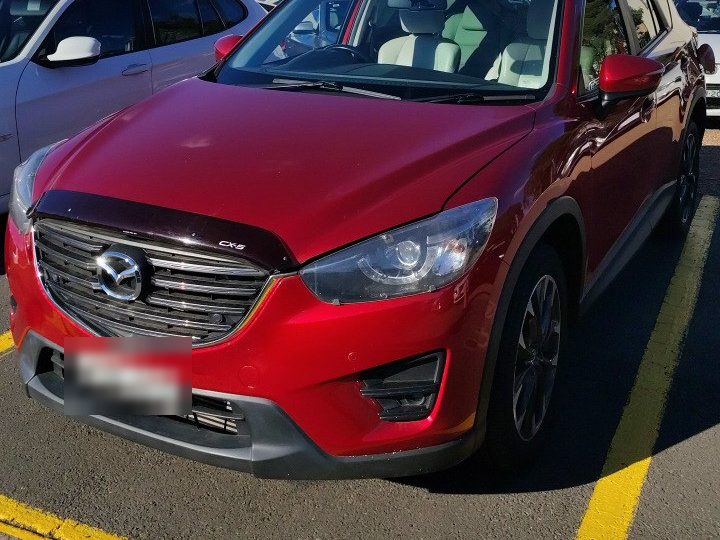 KE (2012–2017)
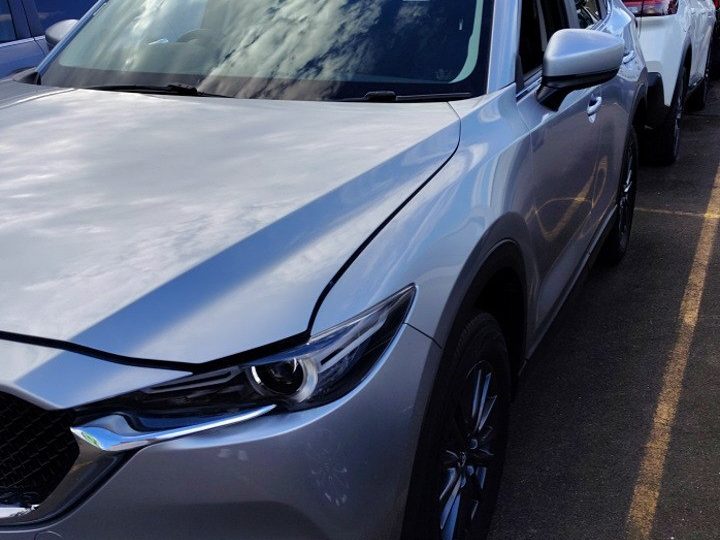 KF (2017–2021)
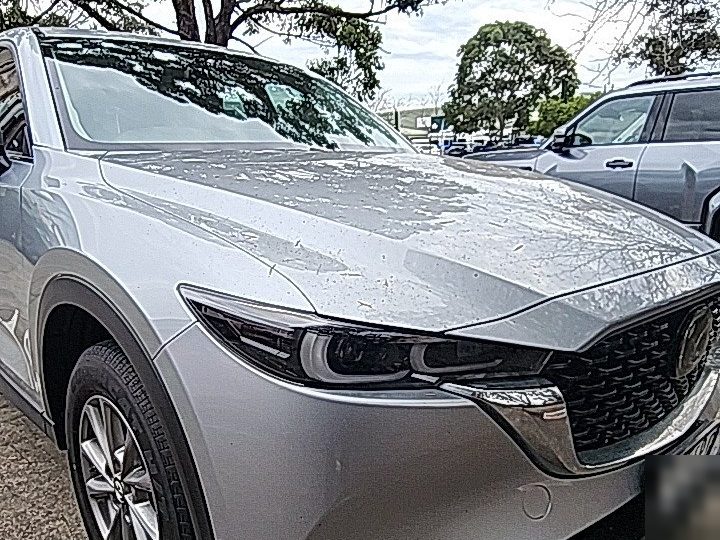 KF facelift (2022–2025)
| Generation | Years (approx.) | Engines (Australia) | Main concerns |
|---|---|---|---|
| KE | 2012–2017 | 2.0L, 2.5L petrol; 2.2L diesel | Diesel oil dilution and carbon (recall), front suspension wear, early auto whine, DRL recall (2015–16) |
| KF | 2017–2021 | 2.0L, 2.5L petrol; 2.5L turbo (2019 on); 2.2L diesel | Fuel pump recall (2017–19), 2.5L engine software recall, oil leaks and seepage, turbo oil use |
| KF facelift | 2022–2025 | As KF; diesel dropped from the 2024 model year | Too new for long-term trends; oil seepage seen even on low-km cars |
What we found on 20 CX-5s
These figures come from 20 Mazda CX-5s we inspected in Sydney between March and November 2026: 7 KE, 11 KF and 2 facelifted KF, from 35,000 to 202,000 km. 18 were petrol and 2 were diesel. The sample is small, especially for the facelift, so treat it as a guide to what to look for.
| Finding | All | KE | KF | Facelift |
|---|---|---|---|---|
| Stored fault codes (OBD scan) | 14/20 | 5/7 | 8/11 | 1/2 |
| At least one resprayed panel | 14/20 | 4/7 | 9/11 | 1/2 |
| Brakes due or overdue | 13/20 | 3/7 | 9/11 | 1/2 |
| Weak or failing 12V battery | 12/20 | 5/7 | 7/11 | 0/2 |
| Engine oil leak or seepage | 12/20 | 3/7 | 7/11 | 2/2 |
| Tyres worn, aged or due soon | 11/20 | 4/7 | 6/11 | 1/2 |
| Front suspension or steering wear | 10/20 | 5/7 | 5/11 | 0/2 |
| Steering wheel or interior wear | 6/20 | 3/7 | 3/11 | 0/2 |
| Rust or underbody damage | 4/20 | 2/7 | 2/11 | 0/2 |
Estimates are the ranges in our customer reports. "Median" uses the midpoint of each car's range. Actual repair costs vary.
CX-5 common problems (petrol and all models), most serious first
2.5L petrol: cylinder deactivation rocker arm recall
The 2.5L petrol in the KF can shut down two cylinders to save fuel. On cars sold from February 2018 to May 2019, the engine software controlling this could let an intake valve rocker arm move out of place and hit other engine parts. Mazda recalled them in 2019 to reprogram the engine computer.
- Reduced power or stalling
- Engine won't restart
- Check engine light
Check the VIN for the recall (PRA 2019/17672) with Mazda. Listen for ticking from the top of the engine and check for engine light codes.
Fuel pump recall: stalling while driving
The low-pressure fuel pump's impeller can deform and stop the pump working, which can stall the engine while driving. Mazda recalled more than 90,000 vehicles across its range in Australia, including 2017–2019 CX-5s, and replaces the pump free.
- Rough running or hesitation
- Stalling, sometimes without warning
- Hard starting
Check the VIN for recall REC-005009 with Mazda or at vehiclerecalls.gov.au, and ask for the dealer's recall paperwork.
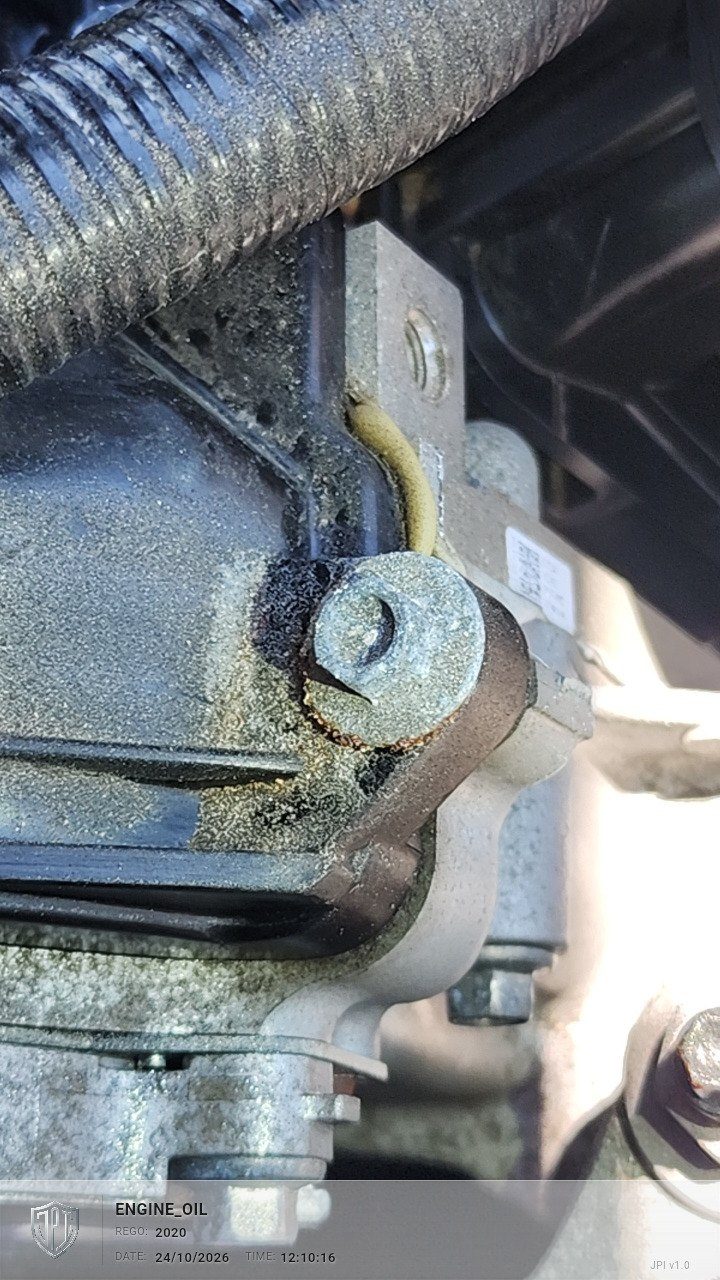
Engine oil leaks and seepage
This was one of our most frequent findings on CX-5s, and not only on old cars: we found leaks or seepage on 2020–2021 cars under 60,000 km and on 2023 and 2024 facelift models. One report noted seepage from the timing chain side of the engine, which matches what Mazda workshops report on the SkyActiv engines. A light seep is not urgent, but it should be fixed before it spreads or drips onto the exhaust.
- Wet, dark residue around the timing cover, rocker cover or sump
- Oil spots where the car is parked
- Burning oil smell after a drive
Look at the front (timing side) of the engine and underneath at the sump with a torch. On a car still under Mazda's warranty, get it fixed under warranty before you buy, or make it a condition of sale.
Oil consumption, especially the 2.5L turbo
Owners report oil use between services, most often on the 2.5L turbo. In the US, worn exhaust valve stem seals on 2021 2.5L turbo Mazdas led to a class action settlement with free seal replacement and a longer powertrain warranty. Whether a similar program applies in Australia should be checked with Mazda. Two of the CX-5s we inspected were low on oil.
- Oil level low between services
- Blue smoke on start-up
- Oil level warning
Check the oil level on the dipstick. A low level on a recently serviced car is a warning sign. On a turbo, look for blue smoke at start-up and ask whether any oil consumption work has been done.
Front suspension and steering wear
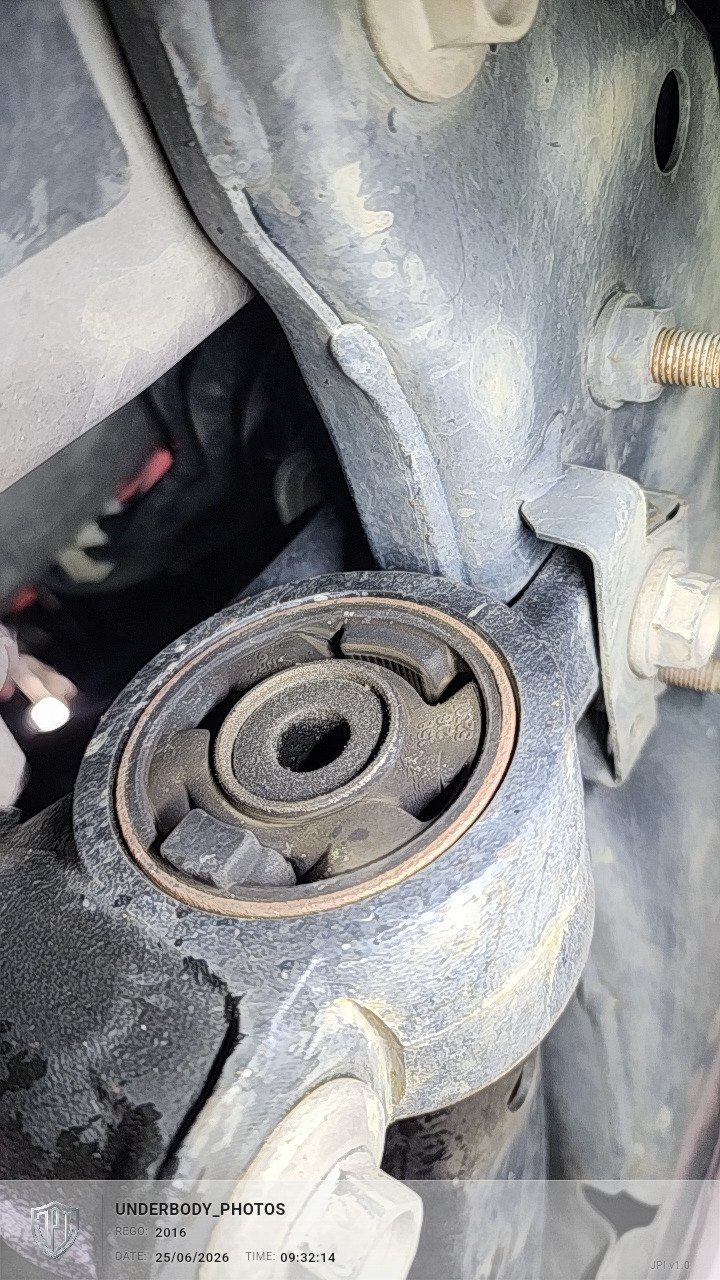
This was the most common mechanical finding on the CX-5s we inspected. We found worn or broken front sway bar links on 6 cars, worn ball joints on 3 (flagged safety-critical, all on KE cars), worn control arm bushes on 3, and on two 200,000 km KE cars, a worn steering rack and tie rod ends. One 2019 Akera also had a leaking rear shock absorber.
- Knocking or rattling from the front over bumps
- Clunk when turning or braking
- Vague steering or uneven tyre wear
Drive slowly over speed bumps with the window down and listen for knocks. With the car raised, check the sway bar links, ball joint boots and control arm bushes for play and splits.
Automatic transmission: shudder and early whine
The 6-speed automatic is generally reliable. Early KE models (2012–2013) had a transmission whine covered by a Mazda service bulletin, and on later cars owners report torque converter shudder as the converter locks up. Mazda has addressed both with service fixes. The gearbox has no scheduled fluid change, so higher-km cars benefit from one.
- Whine that rises with road speed
- Shudder at light throttle around 50–80 km/h
- Harsh or delayed shifts
On the drive, use light throttle through 50–80 km/h to feel for shudder, and listen for a whine at steady speed. Ask whether the transmission fluid has ever been changed.
Carbon build-up on the petrol engine's intake valves
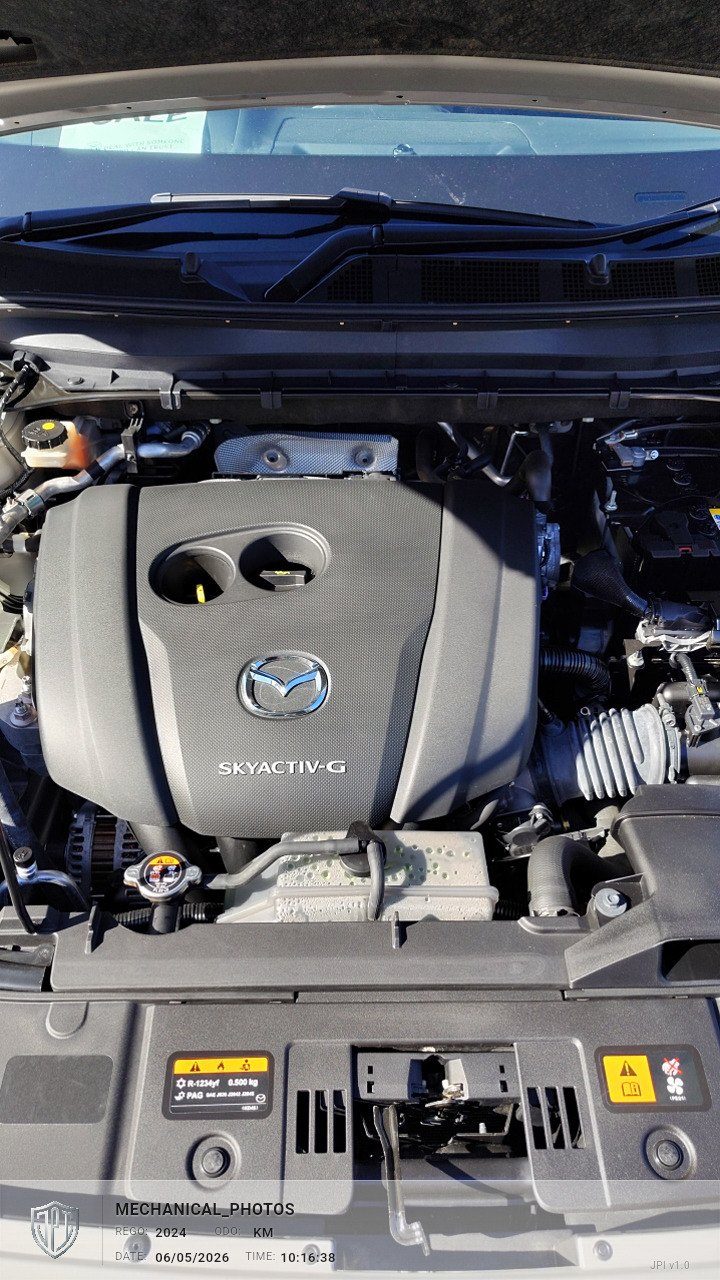
Like most direct-injection petrol engines, the SkyActiv-G sprays fuel straight into the cylinder, so nothing washes the back of the intake valves. Carbon builds up over time, especially with short trips, and can cause rough idle and misfires on higher-km cars.
- Rough or uneven idle
- Misfire codes
- Hesitation when accelerating
Listen to the idle when warm and scan for misfire codes. Regular highway driving and on-time services help.
Smart City Brake Support, cameras and the windscreen
Owners report false automatic braking and sensor-blocked warnings from Smart City Brake Support, often after a windscreen replacement where the camera or sensor was not refitted or calibrated properly. Stress cracks in the windscreen are also reported. Three of the CX-5s we inspected needed windscreen work.
- Sudden braking or warnings with nothing ahead
- 'Smart City Brake Support' unavailable messages
- Chips or cracks in the windscreen, especially near the camera
Check the windscreen for chips and cracks and ask whether it has been replaced. On the drive, make sure no safety system warnings appear.
Mazda Connect, power mirrors and A/C
The Mazda Connect system can freeze, lose its phone connection or go black, which is often fixed with a software update. Power-folding mirrors can fail as their gears wear. We found faulty power mirrors on 2 cars and air-conditioning faults on 2.
- Screen freezing, rebooting or going black
- Phone not connecting
- Mirror not folding, or folding with a grinding noise
- Weak or warm air-conditioning
Connect your phone, try the screen and the rotary controller, fold the mirrors both ways, and run the A/C on max for a few minutes.
Steering wheel leather and interior wear
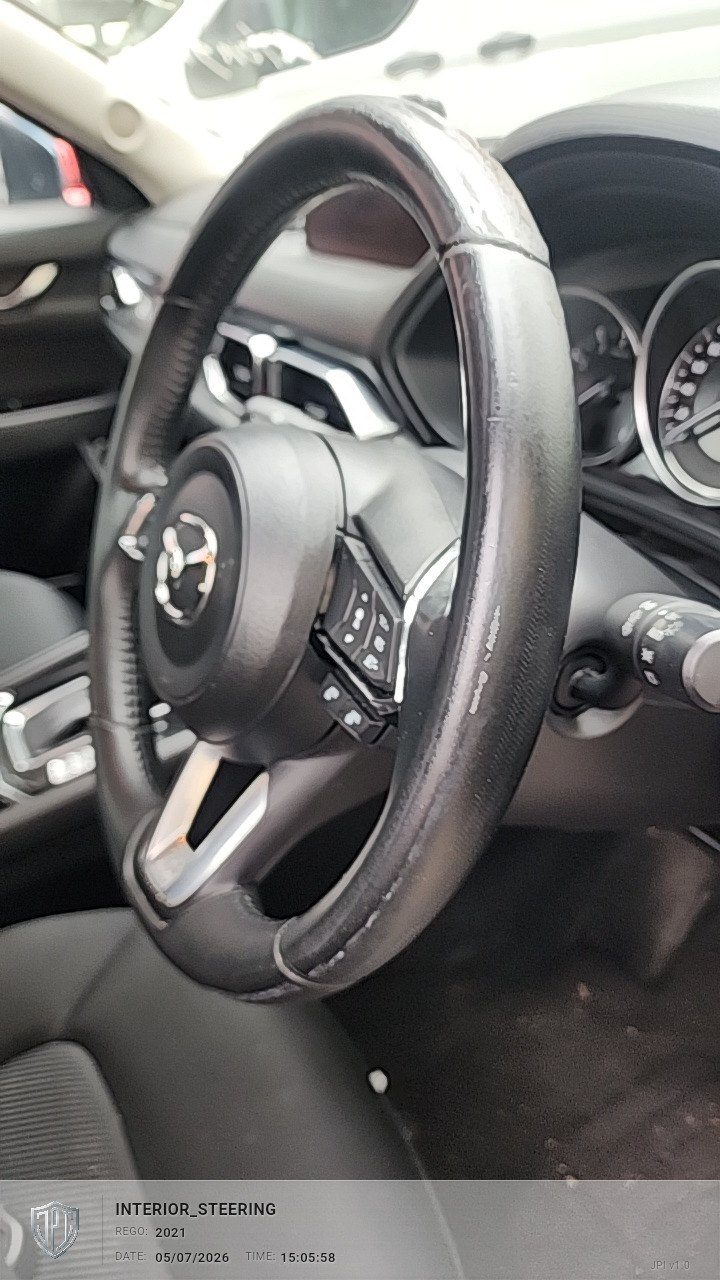
Worn or peeling steering wheel leather came up on 5 of the CX-5s we inspected, along with worn seats, pedals and centre consoles on high-km cars. It is cosmetic, but wear that doesn't match the odometer reading is worth asking about.
- Shiny, cracked or peeling steering wheel leather
- Worn driver's seat bolster
- Worn pedal rubbers
Compare interior wear with the kilometres. Heavy wear on a low-km car can be a sign of a wound-back odometer. Our free odometer check helps here.
Paint chips, previous paintwork and rust
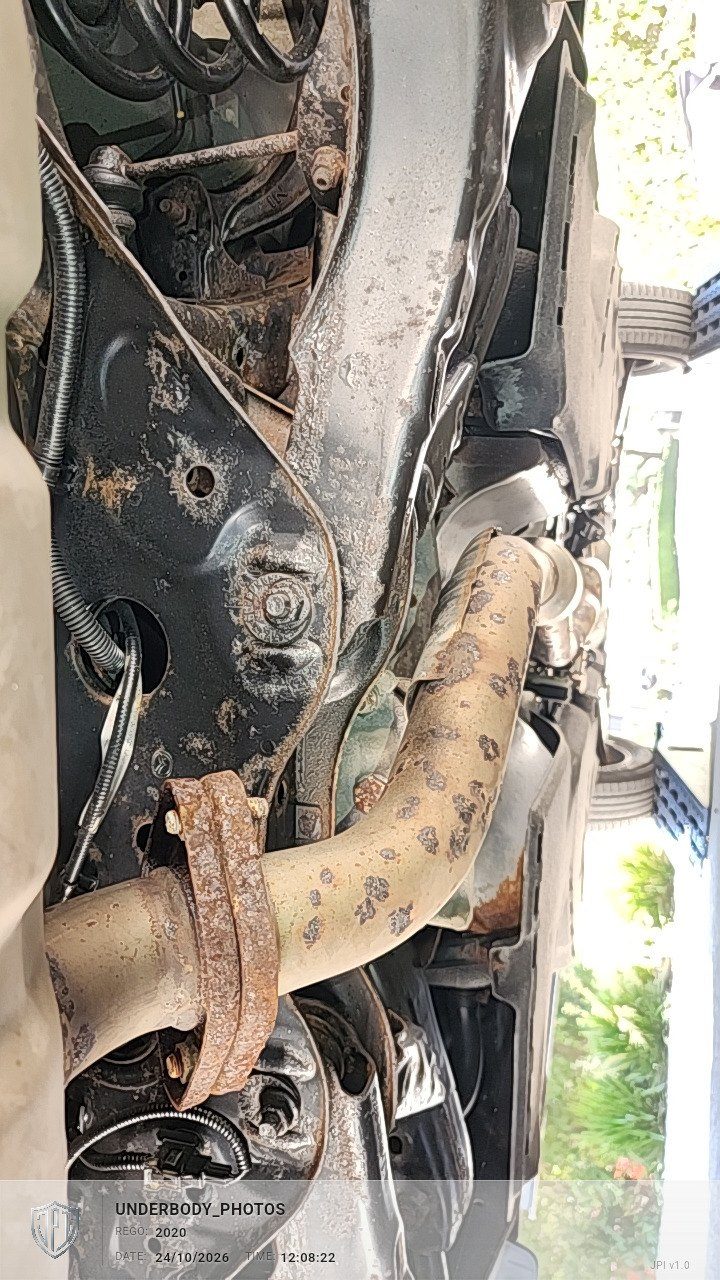
Mazda's paint is often criticised as thin and easy to chip, especially Soul Red Crystal. We found resprayed panels on 14 of 20 CX-5s, most often the front bumper (11 of 20). We also found undercarriage rust on 4. Several repainted panels on one side can point to a bigger accident than the seller mentioned.
- Stone chips on the bonnet and bumper
- Colour mismatch between panels
- Rust at the bottom edges of the doors or underneath
A paint thickness gauge shows which panels were repainted and roughly how heavily. We take a reading on every panel. Check the bottom edges of the doors and the underbody for rust.
Tyres, brakes and the AWD system
Brakes due or overdue (13 of 20) and worn or aged tyres (11 of 20) were very common on the CX-5s we inspected. On AWD models, mismatched tyre sizes or wear can upset the AWD system, so tyres should be replaced as a matching set.
- Brake pads or discs near their limit
- Tyres of different brands or wear levels
- Tyres more than 6 years old
Check the tyre date codes and that all four tyres match on an AWD car. Measure the brake pads and look at the discs for lips and scoring.
Weak 12V battery and stored fault codes
12 of the 20 CX-5s we inspected had a weak or failing 12V battery, and 14 had stored fault codes. Cars with i-stop (engine stop-start) are hard on batteries and need the correct battery type. Many codes trace back to low voltage. Others point to real faults such as ABS sensors.
- i-stop no longer working
- Slow cranking on cold mornings
- Stored codes with no warning light
Test the battery with a load or conductance tester and check it is the right type for i-stop. Scan every module. If codes look battery-related, sort the battery first, then clear and rescan.
Diesel-only problems (2.2L SkyActiv-D)
These apply only to the 2.2L diesel, sold in the KE and KF until the 2024 model year. If you're looking at a petrol CX-5, you can skip this section.
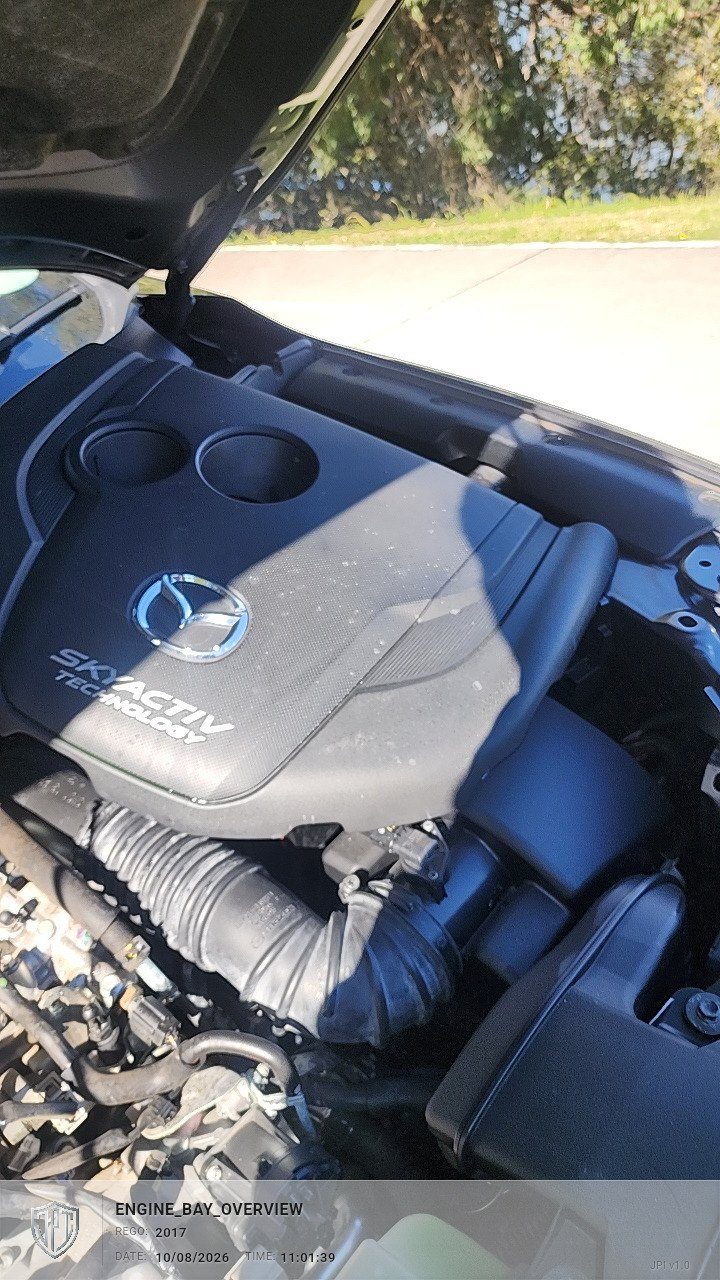
Diesel only: oil dilution and engine failure
On the 2.2L diesel, short trips interrupt the DPF's regeneration cycle and unburnt diesel washes past the piston rings into the sump. The oil level rises, the oil thins out and the engine can be badly damaged. It was most common on the KE, where Mazda advised owners to check the oil often and later fitted updated software and a recalibrated dipstick. Some engines were replaced.
- Oil level rising between services, or above the max mark
- Oil smelling of diesel
- Low oil pressure warning
- History of mostly short suburban trips
Pull the dipstick: above the max mark is a red flag on this engine. Ask how the car was driven and look for frequent oil changes and Mazda software updates in the history. A diesel CX-5 that only did school runs is the riskiest kind.
Diesel only: intake carbon build-up and the 2019 recall
In October 2019 Mazda recalled more than 34,000 diesel Mazda3, Mazda6 and CX-5 models (CX-5s built 2012–2018) because carbon builds up in the intake shutter valve and some engine parts wear early. The result can be loss of power, warning lights and stalling. The fix was an inspection, repairs where needed and an engine software update.
- Gradual loss of power
- Several warning lights at once
- Rough running or stalling
Ask for proof the recall work (REC-000894) was done, or check the VIN with Mazda on 1800 034 411 or at vehiclerecalls.gov.au. On the drive, check for flat spots and warning lights.
Diesel only: coolant loss and overheating
Coolant being pushed into the overflow tank, coolant loss with no visible leak and overheating are reported on higher-km 2.2L diesels, and often point to a failing head gasket. One of the two diesel CX-5s we inspected, a 2017 at 126,000 km, needed cooling system and coolant leak repairs for overheating.
- Coolant level dropping, or bubbling in the overflow tank
- Temperature gauge rising when towing or climbing
- White smoke from the exhaust
Check the coolant level cold and look for residue around the hoses and radiator. A cooling system pressure test or a combustion gas (block) test confirms head gasket problems.
Diesel only: DPF clogging
The diesel particulate filter needs regular highway driving to burn off soot. Diesel CX-5s used for short trips clog the filter, regenerate more often and dilute the oil (see above). Mazda's diesel suits drivers who do regular long runs.
- DPF warning light
- Cooling fan running after switch-off
- Loss of power
- Rising fuel use
Scan for DPF codes and check how the car was used. If you mostly drive in town, a petrol CX-5 is the safer choice.
CX-5 recalls to check by VIN
Recall work is free and stays with the car, but it doesn't always get done. These are the recalls with the most bearing on a used purchase:
| Recall | Affects | Issue |
|---|---|---|
| REC-005009 | KF 2017–2019 (and other Mazdas) | Low-pressure fuel pump impeller can deform, stalling the engine |
| PRA 2019/17672 | KF 2.5L petrol sold Feb 2018 – May 2019 | Cylinder deactivation software can let an intake rocker arm move out of place |
| REC-000894 | KEKF 2.2L diesel built 2012–2018 | Carbon in the intake shutter valve and early engine wear: power loss or stalling |
| PRA 2018/16896 | KF diesel sold 24 April – 28 May 2018 | Engine may not restart after switching off (software fix) |
| REC-000898 | KE 2015–2016 | Daytime running lights may flicker or fail |
Check any VIN at vehiclerecalls.gov.au or with Mazda Customer Support on 1800 034 411. Recalls are added over time, so check the specific car.
Smart checks before you buy
Match the engine to how you drive
A diesel CX-5 that spent its life on short trips is the riskiest used CX-5 you can buy. For mostly city driving, choose a petrol. The 2.5L turbo is strong but uses premium fuel and is worth an oil level check.
Get the service history and recall paperwork
Look for regular oil changes, Mazda software updates and recall work. Two of the CX-5s we inspected had no spare key, and replacement keys are expensive.
Run a PPSR and odometer check
A PPSR shows finance owing, write-off and stolen status. Our free odometer & VIN check compares the reading with auction and listing records, which is useful when interior wear doesn't match the kilometres.
Mazda CX-5 FAQs
Generally yes, especially the petrol models. The CX-5's known problems are mostly recalls that should already be fixed, oil leaks and seepage, and wear on front suspension parts as the kilometres build up. The 2.2L diesel is the one to be careful with: oil dilution, intake carbon and coolant loss can lead to expensive engine repairs if the car was used mainly for short trips.
For mostly suburban driving, a petrol CX-5 is the safer used buy. The 2.2L diesel needs regular highway runs to keep its particulate filter healthy, and short-trip diesels are the ones that suffer oil dilution and carbon problems. Mazda stopped selling the diesel in Australia from the 2024 model year. If you do want a diesel, check the oil level, the service history and the recall work carefully.
The KE is the first generation (2012–2017). The KF (2017–2025) is the second generation, with a new body, a quieter cabin and updated engines, including a 2.5L turbo from 2019. The KF was facelifted for 2022 with a 3D-textured grille, new head and tail lights and Mi-Drive drive modes; the engines carried over, and the diesel was dropped from the 2024 model year.
Yes. Key recalls include the 2019 diesel intake carbon recall for 2012–2018 diesels (REC-000894), a 2019 engine software recall for 2.5L petrol cars sold February 2018 to May 2019, a fuel pump recall covering 2017–2019 KF models (REC-005009), and a daytime running light recall for 2015–2016 KE models. Check any car's VIN with Mazda or at vehiclerecalls.gov.au.
As a rough guide from our reports: an engine oil leak repair is about $300 to $900, a front sway bar link $150 to $450, a ball joint $350 to $700, a 12V battery $250 to $400 and a front bumper respray $600 to $900. A DPF replacement on a diesel is about $1,600 to $3,300 in Sydney. Actual costs depend on the car, the parts and the workshop, so always get a quote.
Thinking of buying a CX-5?
We come to the seller anywhere in Sydney. We check for oil leaks, worn suspension, recall work, battery health and paint thickness on every panel, scan every module, and on diesels check the oil level and DPF. A FREE PPSR is included, and every fault in your report comes with a repair estimate.
Book a Pre-Purchase Inspection